
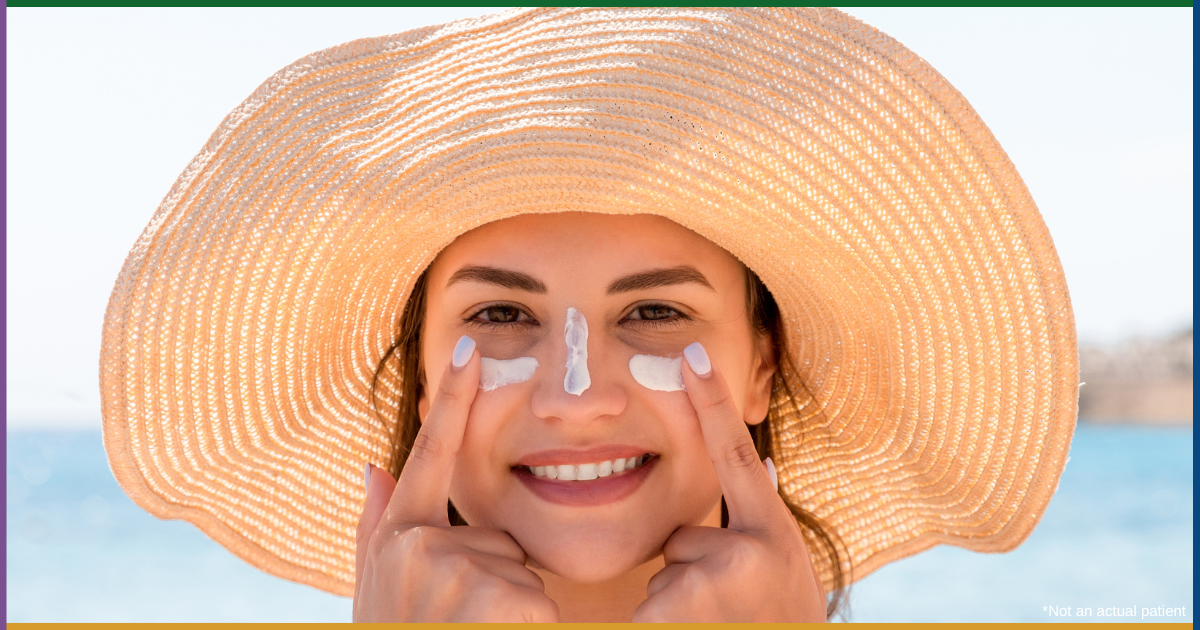
There are over 5 million cases of skin cancer in America each year. In fact, skin cancer is America’s most common cancer. It’s also the most preventable one. Understanding skin cancer and the dangers of sun exposure can save lives. Here’s what you need to know.
May is Skin Cancer Awareness Month
May is a time dedicated to sharing facts about skin cancer, encouraging people to check their skin and informing people of the dangers and warnings signs of skin cancer. This year, the Skin Cancer Foundation is focusing on the rise of dangerous misinformation online regarding skin cancer.
Skin Cancer Facts
- 1 in 5 Americans will develop skin cancer.
- Early detection is key to treating Melanoma.
- 80% of skin aging is caused by the sun.
- Studies show that Melanoma was reduced 50% and squamous cell carcinoma was reduced 40% in people who used daily sunscreen.
- More people develop skin cancer from indoor tanning than those who develop lung cancer from smoking.
Sun Safety Checklist
There are several things you can do to protect your skin from UV exposure. These include things like:
- Wear daily sunscreen and reapply when spending time outside
- Wear wide brimmed hats and sun safe clothing when outdoors
- Choose UV blocking sunglasses to protect your eyes
- Stay in the shade when possible
- Do monthly skin checks
- Get annual skin cancer screenings
Busting Skin Cancer Myths
While skin cancer rates continue to rise, myths and misinformation are increasing drastically online. Unsafe tanning trends, untrue sunscreen claims and dangerous misconceptions about skin cancer with no basis in science run rampant.
Unfortunately, this misinformation, coupled with dangerous online trends like “burn line” and “max-tanning” endangers people. So, lets set the record straight and bust these skin cancer myths. Here are the facts.
Anyone can get skin cancer. Nobody is immune to it, despite age or skin tone.
- Skin cancer is very serious, and even deadly.
- UV radiation is a proven human carcinogen, but almost half of Americans believe that tanning and sun protection are myths.
- Sunscreen prevents skin cancer; it doesn’t cause it.
- Indoor tanning is extremely dangerous and strongly linked to melanoma and other skin cancers. In fact, a single indoor tanning session raises your risk of Melanoma by up to 75%.
Misinformation Q & A
Does a “base tan” prevent sunburn?
No. There’s no such thing as a safe tan. Tan skin is sun damaged skin and this damage is cumulative; it continues to build.
Are tanning beds safer than outdoor sunbathing?
No. Tanning beds produce UV radiation that is 10-15 times more powerful than the sun at peak intensity.
Do I really need to wear sunscreen on cloudy days?
Yes, you need to protect your skin on cloudy days, even if the UV index is low, and all year round. UV radiation is still present on cloudy days, in the middle of the winter and even during snow days.
Can I get skin cancer on skin that isn’t exposed to sun?
Yes. Certain types of skin cancer, like acral lentiginous melanoma, develops on the palms of the hands, soles of the feet, and under fingernails. Skin cancer can also develop inside the mouth or on genital areas.
Does my age or skin tone protect me from skin cancer?
No. skin cancer can impact people of any age and skin tone. Unfortunately, people of darker skin tones are often diagnosed later, when skin cancer is harder to treat. This is another reason why it’s so important to know the warning signs and be proactive.
Is homemade sunscreen safe?
No. Homemade sunscreens made from coconut oil or beef tallow are not safe. They do not offer protection from the sun and should not be used as a replacement for sunscreen.
Where Can I Get a Skin Cancer Screening?
Cronin Dermatology specializes in skin cancer treatment, lasers, cosmetic procedures, acne treatment, and anti-aging treatments. Contact us today for a one-on-one consultation!